
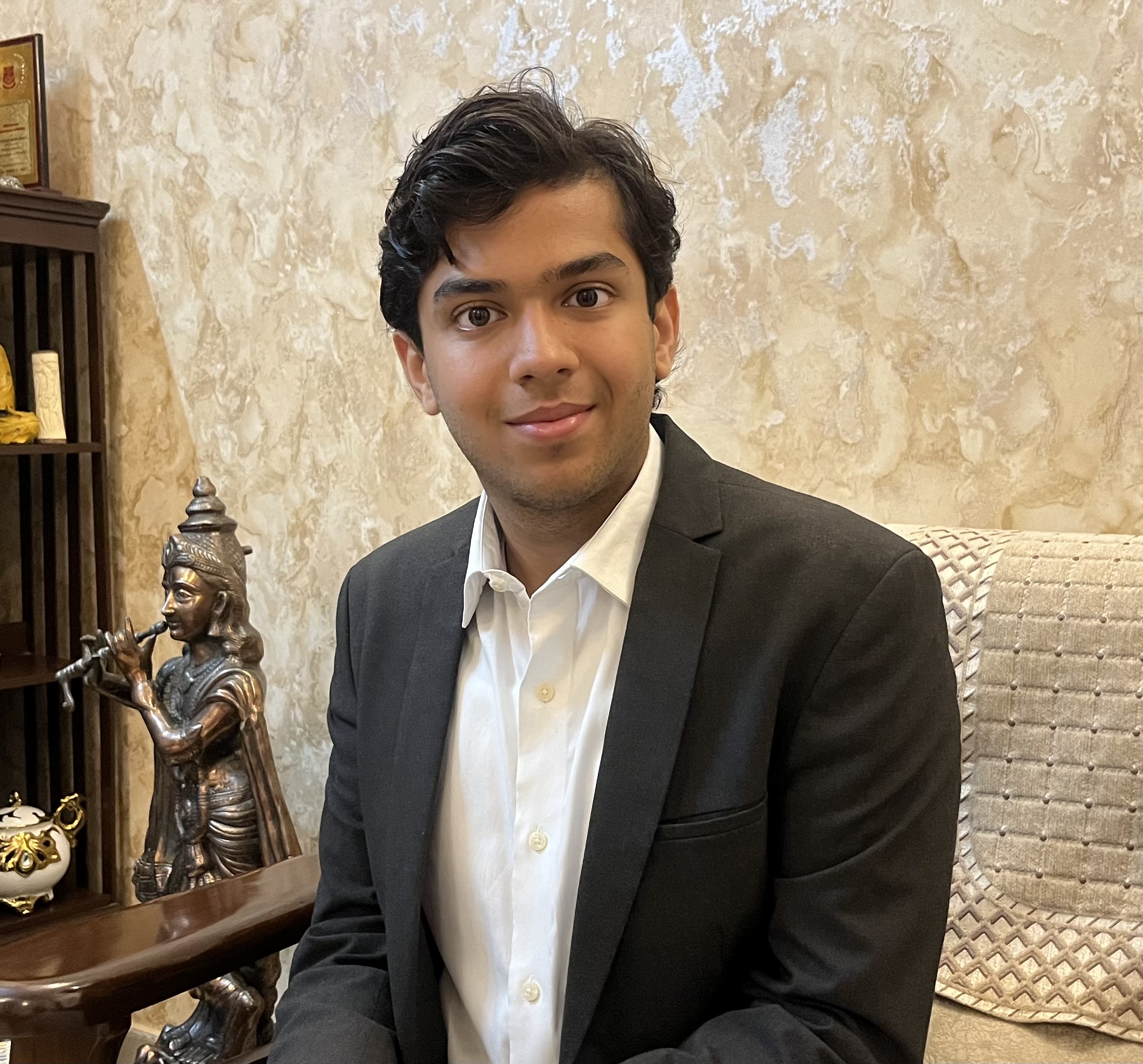
Stanford-based Indian Researcher to Present AI-Driven Schizophrenia Study at UK Psychiatry Congress
BHOPAL/A Stanford University researcher of Bhopal’s Madhya Pradesh origin, Rushank Goyal, has been selected to present his AI-driven study on schizophrenia drug discovery at the prestigious International Congress of the Royal College of Psychiatrists in the United Kingdom next month.
Rushank is working in applied artificial intelligence (AI) and computational biology at Stanford University in California, United States, and has applied machine-learning-based ligand optimisation methods to identify new therapeutic compounds for schizophrenia, one of psychiatry’s most challenging disorders.
Goyal, a RISE (Rise for the World) Global Winner, is currently pursuing a degree in Computer Science at Stanford University from India, on the prestigious Rhodes Trust Scholarship.
His research paper titled “Expanding the Antipsychotic Arsenal: Drug Discovery for Schizophrenia via Virtual Screening and Ligand Optimisation of FDA-Approved Drugs” has been selected for presentation at the International Congress.
The study highlights the growing convergence of artificial intelligence and biomedical research. Using computational screening and AI-based molecular optimisation methods, Goyal evaluated approximately 1,600 FDA-approved drugs for their potential binding affinity to the dopamine D2 receptor (DRD2), a key target for antipsychotic medications.
The computational pipeline successfully identified risperidone — a widely used antipsychotic — as the top binder with a molecular docking score of -11.9 kcal/mol, validating the robustness of the workflow. The research further identified dolasetron and trazodone as compounds deserving further scientific attention.
In a notable application of machine learning, Goyal generated 450 structural variants from six established antipsychotics using an AI-driven molecular similarity algorithm. One optimised candidate derived from risperidone achieved a superior docking score of -13.6 kcal/mol, demonstrating the potential of AI to enhance existing drug molecules.
Speaking to The Sun Today on his work from California, Rushank Goyal said, “What this research demonstrates is the potential of AI-assisted computational methods to identify promising therapeutic candidates more efficiently than conventional early-stage discovery approaches. Any potential drug candidate would still require extensive experimental validation and clinical testing before therapeutic use could be considered.”
Schizophrenia affects millions worldwide, with many patients experiencing limited response or significant side effects from current treatments. Experts view such AI-powered approaches as valuable tools in accelerating early-stage drug discovery by intelligently navigating the vast chemical space of potential molecules.
Rushank has previously contributed to machine learning methods for biomarker discovery, with his work presented at the International Symposium on Biomedical and Computational Biology and published in a Springer book volume.
This achievement by the young researcher of Madhya Pradesh origin underscores India’s growing talent in applying artificial intelligence to critical healthcare challenges on the global stage.
Disclaimer: The findings are preliminary computational results and do not constitute any clinical recommendation. Patients should continue consulting qualified medical professionals for treatment decisions.
